School Timetable. Weekly Planner
The rhythm of a productive week is rarely accidental; it is designed. For students, educators, and creative professionals alike, the School Timetable. Weekly Planner serves as more than a simple grid of days and hours. It is a strategic framework that transforms chaotic schedules into manageable workflows. Whether you are a parent organizing a child’s homework routine, a teacher managing lesson plans, or a freelancer structuring your study sessions, this organizational tool provides the necessary structure to balance academic demands with personal well-being. The true value lies not just in listing classes, but in creating a visual map of time that encourages discipline while allowing for flexibility.
The Core Value of Structured Planning
At its heart, a weekly planner schedule for students acts as an external hard drive for the brain. Cognitive load theory suggests that trying to remember every deadline, exam date, and extracurricular commitment drains mental energy needed for actual learning. By offloading these details onto a dedicated school study organizer, individuals free up cognitive resources for critical thinking and creativity. A well-designed template includes distinct spaces for notes, ensuring that fleeting ideas or specific instructions from teachers are captured immediately rather than lost in the shuffle of daily life.
The effectiveness of a School Timetable. Weekly Planner often depends on its ability to visualize time blocks. Unlike a simple to-do list, which can be endless and overwhelming, a timetable imposes boundaries. These boundaries create a sense of urgency and focus. When a student sees that they have a forty-five-minute block for mathematics followed by a fifteen-minute break, the scope of work becomes clear. This clarity reduces anxiety and procrastination, two major hurdles in academic success. For adults managing their own education or professional development, this same principle applies: defining the "when" makes the "what" achievable.
Design Elements That Drive Engagement
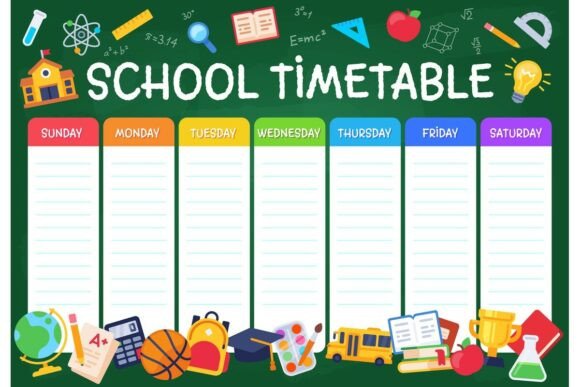
Not all planners are created equal. The most effective tools combine functionality with visual appeal to encourage consistent use. An illustration education planner should feature clear typography, logical spacing, and intuitive color coding. Vector templates offer the advantage of scalability, meaning the design remains crisp whether printed on a large wall poster or shrunk down to fit a pocket notebook. When designing or selecting a schedule and organizer, consider the following elements:
- Dedicated Note Sections: Every day needs a small area for quick reminders, such as "bring gym kit" or "read chapter 4." This prevents the main schedule from becoming cluttered.
- Flexible Time Blocks: While fixed class times are essential, leaving some white space allows for unexpected events, study catch-ups, or rest periods.
- Visual Hierarchy: Use bold fonts for core subjects and lighter weights for optional activities to guide the eye naturally through the week.
- Motivational Cues: Subtle design touches, like progress bars or check-off boxes, can gamify the planning process and boost morale.
Adapting the Template for Diverse Audiences
One of the most powerful aspects of a school study organizer vector template is its adaptability. While the primary audience is pupils and students, the underlying structure serves a wide range of users with different goals. Creators and designers can repurpose the layout to manage project milestones, treating each "class period" as a focused work session. Marketers might use the weekly planner schedule to map out content calendars, aligning social media posts with specific days and times. Entrepreneurs often find that the rigid structure of a school timetable helps them maintain work-life balance, preventing burnout by strictly defining when work ends and personal time begins.
For educators, the School Timetable. Weekly Planner is indispensable for curriculum mapping. Teachers can use the same format to plan lessons, track student progress, and schedule parent-teacher meetings. By customizing the columns to include subject areas, learning objectives, and assessment dates, the planner becomes a comprehensive management dashboard. Even hobbyists and freelancers benefit from this approach. A writer might assign specific genres to specific days, using the planner to ensure a diverse portfolio of work without feeling overwhelmed by competing deadlines. The key is to treat the template not as a static document, but as a dynamic canvas that evolves with the user's needs.
Practical Strategies for Implementation
Having a beautiful template is only half the battle; the real challenge lies in consistent implementation. To make a weekly planner schedule for students truly effective, it requires a ritual of review and adjustment. Start by sitting down at the beginning of each week to fill in the fixed commitments first—classes, sports practices, and family obligations. Once the skeleton is in place, layer in the flexible tasks like studying, reading, and creative projects. This method ensures that essential responsibilities are never missed while still carving out time for growth.
- Color Code by Priority: Assign specific colors to different types of tasks. For example, red for exams, blue for assignments, and green for leisure. This visual cue helps prioritize work instantly.
- Review Daily: Spend five minutes each morning scanning the day ahead and five minutes each evening reviewing what was accomplished. This keeps the plan alive and relevant.
- Iterate the Design: If a particular section feels too cramped or confusing, adjust the layout. The best school study organizer is one that fits the user's unique workflow.
- Digital vs. Analog: Decide whether a physical printout or a digital version works best. Some learners retain information better by writing by hand, while others prefer the sync capabilities of digital apps.
Creative Interpretations and Variations
The concept of a school timetable extends far beyond the traditional black-and-white grid. Modern interpretations embrace artistic expression, turning the act of planning into a creative outlet. Illustration education planners often feature hand-drawn icons, whimsical borders, and thematic designs that resonate with younger audiences. For instance, a science-themed planner might use molecular structures as dividers, while an art-focused version could incorporate sketchbook textures. These aesthetic choices do more than look nice; they foster a positive emotional connection to the planning process, making students more likely to engage with their schedules.
Furthermore, the School Timetable. Weekly Planner can be adapted for collaborative environments. In group study settings or team projects, a shared digital version of the schedule and organizer allows multiple users to update their availability and task lists in real-time. This promotes transparency and accountability, ensuring that everyone knows who is responsible for what and when. For publishers and bloggers, creating downloadable versions of these planners can serve as valuable lead magnets, offering practical value to their audience while establishing authority in the education or productivity niche.
Ensuring Clarity and Consistency
Regardless of the style or medium, the ultimate goal of any planner is clarity. A cluttered or confusing layout defeats the purpose of organization. When designing or utilizing a school study organizer, prioritize simplicity. Avoid overcrowding cells with text; instead, use abbreviations or symbols where appropriate. Ensure that the distinction between weekdays and weekends is clear, and that the transition between different time zones or school terms is marked visibly. Consistency in formatting across weeks helps build a habit, reducing the friction of starting each new cycle.
Ultimately, the School Timetable. Weekly Planner is a tool for empowerment. It gives users control over their time, allowing them to navigate the complexities of education and professional life with confidence. By combining practical structure with creative flexibility, this versatile template supports a wide array of goals, from acing exams to launching successful businesses. Whether you are a student looking to improve grades or a creator seeking better workflow management, investing time in a robust planning system pays dividends in efficiency, reduced stress, and sustained productivity. The right planner does not just organize time; it optimizes potential.