Surprised Boy Found Unusual Stone: Young Curiosity as a Catalyst for Modern Learning
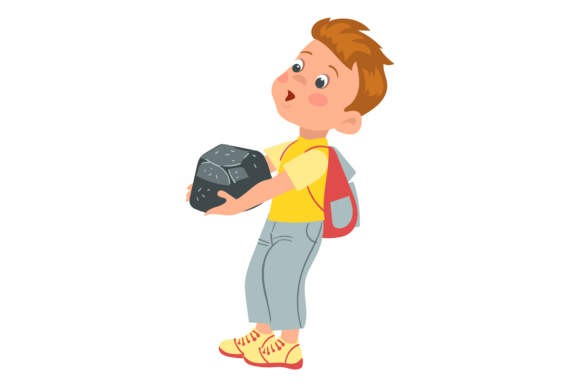
The moment a young boy pauses to examine an unusual stone on the ground, something profound happens. It is not merely a geological discovery; it is a spark of inquiry that bridges the gap between passive observation and active engagement with the world. This specific imagery, often captured in vector cartoon flat style illustrations depicting a surprised boy found unusual stone, has transcended its role as simple clip art. For educators, content creators, and business leaders, this scene represents a critical shift in how we value outdoor education, naturalist skills, and the tangible benefits of pupil education outdoors. In an era dominated by digital screens and abstract data, the act of finding a physical object remains one of the most powerful triggers for cognitive development and creative problem-solving.
The Resurgence of Tangible Discovery in Digital Workflows
We are witnessing a significant pendulum swing in modern workflows and lifestyle preferences. While technology continues to accelerate, there is a growing fatigue regarding purely virtual interactions. Professionals and entrepreneurs alike are seeking grounding experiences that offer clarity and perspective. The narrative of a young naturalist studies world through direct contact with nature resonates deeply because it mirrors a broader desire for authenticity. When a child finds an unusual stone, the process involves tactile sensation, visual analysis, and immediate hypothesis testing. These are the same core competencies required in high-level strategy, product design, and market analysis today.
The relevance of the "surprised boy" archetype extends beyond childhood development. It serves as a metaphor for the agile mindset needed in contemporary business environments. Just as the boy must assess the stone's weight, texture, and composition without prior knowledge, modern professionals must navigate uncertain markets with curiosity rather than rigid assumptions. The image of a summer school camp where students engage in the study of nature is no longer just a recreational activity; it is a model for experiential learning that prioritizes adaptability. Organizations are increasingly recognizing that the ability to observe details in the real world translates directly to identifying nuances in user behavior and market trends.
From Vector Illustrations to Educational Philosophy
The proliferation of visual assets like the vector cartoon flat style on white background illustration EPS, JPG featuring a surprised boy highlights a cultural need to visualize these moments. Designers and marketers use these images to communicate complex ideas about exploration and discovery quickly and effectively. However, the substance behind the image is what drives the trend. The flat, clean aesthetic of these illustrations strips away distraction, focusing entirely on the subject's reaction—the surprise, the wonder, the focus. This visual simplicity aligns with current user expectations for clear, uncluttered communication in both educational materials and corporate branding.
When we analyze why people are paying more attention to this topic, we see a convergence of several factors. First, there is a documented decline in outdoor playtime for children, leading to a pushback from parents and educators who understand the developmental risks. Second, the rise of "biophilic design" in architecture and workplace planning suggests that humans have an innate tendency to seek connections with nature. The story of the boy and the stone encapsulates this connection perfectly. It is a universal moment that requires no translation, making it a potent symbol for global educational initiatives focused on pupil education outdoors.
Practical Implications for Educators and Content Creators
For those involved in curriculum design or content creation, the lesson is clear: integrate tangible, sensory experiences into learning modules. Whether you are designing a summer school camp program or developing a corporate training workshop, the principle remains the same. Encourage participants to step away from the screen and engage with their immediate environment. The "unusual stone" does not have to be literal; it can be any unexpected variable that prompts investigation. By fostering an environment where questions are valued over immediate answers, educators can replicate the cognitive benefits seen in the young naturalist.
Content creators should also leverage this theme to build trust and authority. Audiences aged 20–50 are increasingly skeptical of polished, manufactured narratives. They crave stories that feel authentic and grounded. Sharing observations about the natural world, or using metaphors drawn from outdoor exploration, can make technical or business content more accessible and relatable. For instance, explaining a complex supply chain issue through the analogy of tracking a rare mineral deposit can make the concept stickier and more memorable. This approach aligns with Google's Helpful Content principles, which prioritize original insights and real-world experience over generic summaries.
- Design for Curiosity: Create spaces, whether physical or digital, that invite users to explore rather than just consume information.
- Prioritize Hands-On Learning: Incorporate fieldwork, prototyping, and direct experimentation into professional development plans.
- Visual Storytelling: Use clean, illustrative styles that highlight human emotion and discovery to break through content noise.
- Connect Nature to Innovation: Frame sustainability and environmental awareness not as constraints, but as sources of inspiration for new solutions.
Adapting to Changing Habits and Market Preferences
The evolution of the "study of nature" from a niche hobby to a mainstream educational priority reflects a deeper change in societal values. We are moving away from a culture of consumption toward a culture of stewardship and understanding. This shift impacts everything from real estate developments near green spaces to the marketing strategies of outdoor gear brands. Businesses that fail to acknowledge this connection risk appearing out of touch. Conversely, those that embrace the spirit of the young naturalist—curious, observant, and respectful of the environment—are building stronger brand loyalty.
Consider the implications for the freelance economy and remote work. As more professionals operate from home or co-working spaces, the lack of structured social interaction and physical movement can lead to burnout. Integrating elements of outdoor education into daily routines, such as walking meetings or nature-based brainstorming sessions, can restore mental agility. The discipline required to study a stone closely—patience, attention to detail, and sustained focus—is a muscle that needs regular exercise. In a world of constant notifications, the ability to slow down and observe is becoming a premium skill.
Realistic Applications for Everyday Readers
For the everyday reader, parent, or entrepreneur, the takeaway is practical and actionable. You do not need a full-scale summer school camp to reap the benefits of this approach. Start small. Encourage your team or family to take a "discovery walk" where the goal is simply to find something interesting—a unique leaf, an architectural detail, or yes, an unusual stone. Discuss what makes it different. Ask why it might be there. This simple practice reactivates the neural pathways associated with pattern recognition and critical thinking.
Furthermore, when evaluating educational resources or hiring talent, look for evidence of this type of exploratory mindset. A candidate who can describe a time they solved a problem through observation and experimentation is often more valuable than one who simply recites textbook definitions. The surprised boy found unusual stone scenario is a test of character and intellect. It asks: Are you willing to stop, look closer, and ask "what if?" In a rapidly changing world, that willingness to pause and investigate is the foundation of resilience and innovation.
Ultimately, the image of the young naturalist studying the world reminds us that learning never stops and that the most profound insights often come from the most ordinary moments. By valuing these moments, we prepare ourselves and our communities for a future that demands not just technical proficiency, but deep, empathetic understanding of the world around us. Whether through a digital illustration or a real-life expedition, the message is consistent: stay curious, stay grounded, and keep looking for the unusual stones hidden in plain sight.